Peter Thiel is a visionary entrepreneur, venture capitalist, and one of the most influential figures in Silicon Valley.
Known for co founding PayPal and being an early investor in Facebook, Thiel has built an impressive fortune that has positioned him among the wealthiest tech investors in the world.
His career spans decades of strategic investments, business ventures, and mentorship of emerging startups, making his financial success both remarkable and inspiring.
Many people are curious about Peter Thiel net worth and how he amassed such wealth. Beyond his PayPal and Facebook earnings, Thiel’s portfolio includes investments in startups, hedge funds, and tech companies, which continue to generate substantial revenue.
This article explores Peter Thiel’s net worth in 2026, breaking down his career journey, major investments, assets, lifestyle, and future financial potential.
By understanding how Thiel built his fortune, readers can gain insights into the strategies behind one of the most successful tech investors in history.
Who Is Peter Thiel?
Peter Thiel was born on October 11, 1967, in Frankfurt, Germany, and grew up in the United States. From a young age, he demonstrated a strong interest in technology, philosophy, and entrepreneurship. He attended Stanford University, where he earned a degree in philosophy, followed by a law degree from Stanford Law School. During his time at Stanford, Thiel cultivated a network of like minded innovators and future business leaders, which later became crucial to his success in Silicon Valley.
Thiel began his career as a law clerk and securities lawyer, but his entrepreneurial spirit led him to explore technology and investment opportunities. Early in his professional journey, he worked at Credit Suisse and CSFB, gaining exposure to finance and the workings of global markets. These experiences laid the foundation for his venture into tech entrepreneurship and investing.
Peter Thiel Career Journey
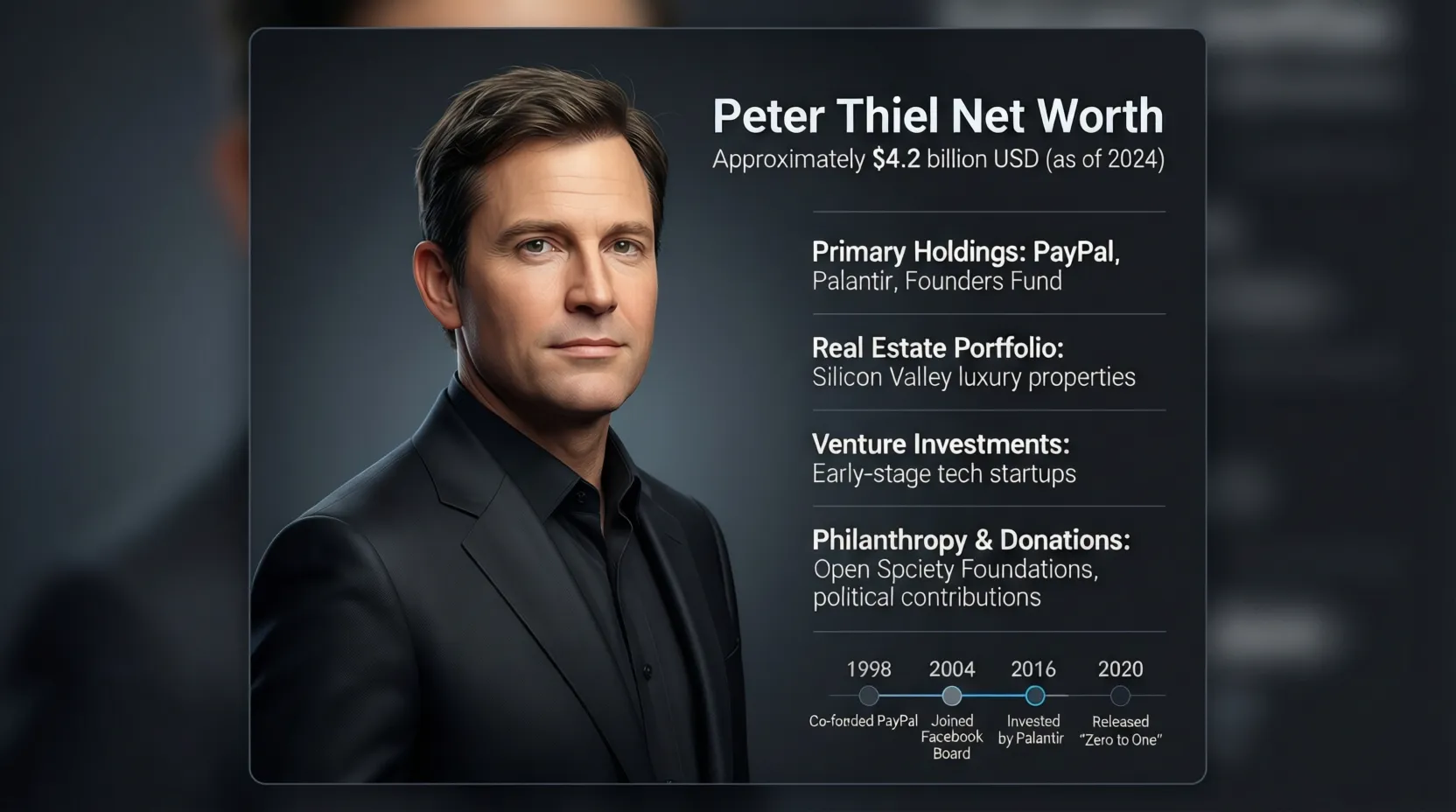
Peter Thiel’s career is a remarkable example of entrepreneurship and strategic investment in technology. In 1998, he co founded PayPal, which revolutionized online payments and became one of the most successful fintech startups of its time. As CEO, Thiel guided PayPal through rapid growth, ultimately leading to its acquisition by eBay in 2002 for $1.5 billion. This exit not only solidified his reputation as a visionary entrepreneur but also provided the capital that would fund his future ventures.
After PayPal, Thiel turned his focus to venture capitalism, founding the Founders Fund in 2005. Through this fund, he invested in high potential startups that would later become household names. Most notably, he was the first outside investor in Facebook, a move that turned out to be one of the most profitable tech investments in history. Beyond Facebook, Thiel has invested in companies like Palantir Technologies, Stripe, and SpaceX, building a diversified and lucrative portfolio.
Thiel is also known for his role as an author and thought leader, writing books such as Zero to One, which shares his insights on startups and innovation. His influence extends beyond finance and technology he has been a mentor to emerging entrepreneurs, shaping Silicon Valley’s culture of innovation.
Overall, Peter Thiel’s career journey demonstrates a combination of vision, risk taking, and strategic investment, which has been instrumental in building his net worth in 2026 and cementing his status as one of the most influential figures in tech and finance.
Peter Thiel Net Worth in 2026
As of 2026, Peter Thiel’s net worth is estimated to be around $7 billion, making him one of the wealthiest tech investors and entrepreneurs in the world. Thiel’s wealth is the result of decades of strategic investments, successful business ventures, and visionary entrepreneurship. His early involvement with PayPal and his stake as the first outside investor in Facebook laid the foundation for his financial empire, generating billions in returns over the years.
In addition to these high profile investments, Thiel has expanded his wealth through venture capital via the Founders Fund, which invests in promising startups across technology, biotech, and finance. These investments, combined with stakes in companies like Palantir Technologies, SpaceX, and Stripe, continue to grow his portfolio and contribute significantly to his net worth.
Thiel also earns from his role as an author, speaker, and advisor, further diversifying his income streams. His book Zero to One has been a commercial success, providing both royalties and global recognition.
While $7 billion is a staggering figure, Peter Thiel’s net worth reflects not only his early successes but also his ability to identify and invest in transformative companies. With his ongoing involvement in new ventures, tech innovation, and strategic investments, Thiel’s wealth is expected to continue growing, securing his place among the most influential and financially successful figures in Silicon Valley.
Main Sources of Peter Thiel Income
Peter Thiel’s impressive net worth is built on multiple income streams, reflecting both his entrepreneurial vision and strategic investment approach. The primary source of his wealth comes from tech investments. Thiel’s early stake in Facebook is legendary, generating billions in returns. Similarly, his co founding of PayPal and its subsequent sale to eBay provided him with the capital to fund other ventures. Investments in companies like Palantir Technologies, SpaceX, and Stripe continue to grow in value, adding substantial revenue to his portfolio.
Another significant income source is venture capital. Through the Founders Fund, Thiel invests in high potential startups, generating profits when these companies succeed or go public. His expertise in identifying transformative technologies gives him an edge in selecting companies with strong growth potential.
Thiel also earns from authorship and public speaking. His book Zero to One became a bestseller, offering insights into startups and entrepreneurship while generating royalties. Speaking engagements, interviews, and advisory roles for emerging entrepreneurs and companies provide additional income streams.
Finally, other business ventures and hedge fund activities contribute to his earnings. Thiel’s diversified approach spanning tech, finance, and media ensures his income is resilient and not dependent on a single source.
In summary, Peter Thiel’s wealth is the product of strategic investments, entrepreneurial ventures, intellectual property, and advisory roles, making him one of the most financially successful and influential figures in Silicon Valley.
Peter Thiel Assets and Investments
Peter Thiel’s net worth is not only derived from his income streams but also from his diverse and high value assets and investments. One of the most notable aspects of his wealth is his real estate portfolio, which includes luxury properties in the United States. Thiel has invested in high profile locations such as Palos Verdes Estates, California, and other strategic real estate, blending personal use with long term appreciation potential.
In addition to real estate, Thiel holds significant equity stakes in private and public companies. His early investments in Facebook, Palantir, SpaceX, and Stripe continue to appreciate, making his stock portfolio a cornerstone of his financial success. Thiel’s careful selection of high growth tech companies reflects his ability to predict market trends and capitalize on innovative ventures.
Thiel has also invested in hedge funds, venture capital, and other alternative assets, providing additional income streams and reducing reliance on a single source of wealth. Furthermore, he owns art collections and collectibles, which not only showcase his personal taste but also serve as appreciating assets.
By combining tangible assets like real estate and collectibles with financial investments in high growth companies, Peter Thiel has created a balanced and resilient portfolio. This strategic approach ensures that his wealth continues to grow steadily, contributing to his overall net worth and securing his place as one of the most influential tech investors of his generation.
Peter Thiel Lifestyle and Spending Habits
Peter Thiel is known for maintaining a relatively private and low key lifestyle despite his billionaire status. Unlike many tech moguls who flaunt luxury publicly, Thiel tends to focus on strategic investments and personal interests rather than extravagant spending. His lifestyle reflects a blend of discretion, sophistication, and intellectual pursuits.
Thiel enjoys luxury real estate, including high end homes in California and other strategic locations. These properties serve both as personal retreats and long term investments, showcasing his preference for assets that combine utility with financial growth. While he owns luxury items, including rare art and collectibles, Thiel is not known for overt displays of wealth, preferring to allocate resources toward ventures and investments that can appreciate over time.
Travel and intellectual exploration also form a part of Thiel’s lifestyle. He frequently attends tech conferences, investment meetings, and industry events, which allow him to stay ahead of trends and expand his influence in Silicon Valley. His hobbies include reading, philosophy, and mentoring emerging entrepreneurs, reflecting a thoughtful and strategic approach to both life and business.
Peter Thiel’s spending habits are highly calculated. He prioritizes investments and ventures that generate wealth rather than short term indulgence. This approach has not only protected his financial standing but has also allowed him to grow his net worth steadily, maintaining his position as one of the most influential and financially savvy tech investors in the world.
Peter Thiel Controversies and Public Attention
Peter Thiel is a figure who has often attracted public attention and controversy, both for his business decisions and political involvement. While he is celebrated as a visionary entrepreneur, his outspoken views and high profile investments have occasionally drawn criticism. Thiel’s involvement in politics, including his support for specific political candidates and movements, has sparked debates and made him a polarizing figure in the public eye.
Beyond politics, Thiel has faced scrutiny for some of his business strategies. His early investment in Palantir Technologies, a company known for its government contracts and data analytics work, has raised ethical questions among critics. Similarly, his participation in tech ventures that push the boundaries of innovation has sometimes led to intense media coverage and public debate.
Despite these controversies, Thiel’s reputation as a shrewd investor and innovator remains largely intact. Media attention, whether positive or negative, has contributed to his prominence and reinforced his influence in both Silicon Valley and the global business community. Interestingly, public scrutiny has not significantly affected his net worth, as his strategic investments and diversified portfolio continue to generate substantial returns.
In summary, Peter Thiel demonstrates that controversy can coexist with success. By maintaining a focus on long term growth, innovation, and strategic investment, he continues to strengthen his financial position and influence, showing that public debates and scrutiny have had limited impact on his career and overall wealth.
Peter Thiel Social Media Presence and Influence
Peter Thiel maintains a relatively low profile presence on social media compared to other billionaires, reflecting his preference for privacy and strategic communication. While he does not frequently post personal updates or lifestyle content, his public statements, interviews, and appearances online have significant influence due to his stature in the technology and finance industries.
Thiel’s presence on platforms like Twitter and LinkedIn primarily revolves around thought leadership, technology insights, investment strategies, and commentary on the startup ecosystem. His posts and shared articles often spark discussions within the tech and venture capital communities, amplifying his influence among entrepreneurs, investors, and policymakers.
Even without a large personal following, Thiel’s ideas and opinions reach a broad audience due to media coverage and citations in news outlets. Analysts, tech enthusiasts, and business publications frequently reference his statements, making his voice highly impactful despite limited direct engagement.
In addition, Thiel’s influence extends beyond social media through mentorship, public speaking, and participation in high profile industry events. By shaping discussions around technology, venture capital, and innovation, he indirectly affects startups, investor behavior, and policy decisions.
In essence, Peter Thiel demonstrates that social media influence does not require constant activity. His strategic communication, combined with high profile achievements and public visibility in tech and finance, ensures that he remains a key influencer. This digital and intellectual presence continues to reinforce his reputation and indirectly supports the growth of his net worth and business ventures.
Peter Thiel Future Projects and Income Potential
Peter Thiel’s wealth and influence are expected to grow in the coming years due to his ongoing involvement in innovative technologies and strategic investments. As a visionary investor, Thiel continuously seeks opportunities in sectors with high growth potential, including artificial intelligence, biotech, fintech, and space exploration. His ability to identify transformative startups ensures that his net worth continues to expand.
Through his venture capital firm, Founders Fund, Thiel remains actively involved in funding startups that have the potential to become industry leaders. These investments not only provide immediate financial returns but also create long term wealth through equity stakes in companies that may achieve significant valuations or go public. His focus on disruptive technologies positions him to capitalize on emerging trends and maintain a competitive edge in the market.
In addition, Thiel’s ongoing advisory roles, speaking engagements, and potential future book projects contribute to his income streams. These endeavors enhance his personal brand, attract partnerships, and generate supplemental revenue.
Thiel has also shown interest in philanthropy and initiatives such as the Thiel Foundation, which supports innovation and entrepreneurship. While these ventures may not directly increase net worth, they strengthen his influence and network, creating indirect financial opportunities.
In summary, Peter Thiel’s future income potential is substantial. By leveraging his expertise in technology, venture capital, and entrepreneurship, he is likely to continue growing his net worth steadily, securing his status as one of the most influential and financially successful figures in Silicon Valley.
Peter Thiel Net Worth Compared to Other Billionaires
Peter Thiel’s net worth of approximately $7 billion in 2026 positions him as one of the wealthiest tech investors, though he ranks below the absolute giants of Silicon Valley like Elon Musk, Jeff Bezos, and Mark Zuckerberg. While Thiel may not have the same household name recognition as some of these figures, his influence in the technology and venture capital sectors is profound, and his wealth is highly diversified across high growth investments.
Compared to other tech billionaires, Thiel’s strategy differs significantly. Unlike Musk or Bezos, who have amassed wealth through leading companies directly, Thiel primarily builds his fortune through early stage investments, venture capital, and strategic stakes in private companies. For instance, his early investment in Facebook and Palantir Technologies has yielded multi billion dollar returns without requiring daily operational involvement.
Among his peers in venture capital, Thiel is considered exceptionally successful. While investors like Sequoia Capital founders have large portfolios, Thiel’s personal investments often focus on disruptive startups and long term innovation, allowing him to generate outsized returns.
Thiel’s position relative to other billionaires highlights a unique blend of financial acumen, patience, and vision. While his net worth may not reach the extremes of the top five richest individuals globally, his influence, strategic investments, and diversified assets make him one of the most respected and financially stable figures in Silicon Valley.
Frequently Asked Questions About Peter Thiel Net Worth
How much is Peter Thiel worth in 2026?
As of 2026, Peter Thiel’s net worth is estimated at $7 billion. This wealth comes from a combination of his early entrepreneurial ventures, strategic investments, and ongoing business activities.
How did Peter Thiel make his money?
Thiel built his fortune primarily through co founding PayPal, which was acquired by eBay in 2002, and being the first outside investor in Facebook. He also earns income through venture capital investments, hedge funds, and other technology startups, as well as royalties from his books and earnings from public speaking.
What are Peter Thiel’s main assets?
Thiel owns luxury real estate, equity in private and public companies, art collections, and other alternative investments. These assets contribute significantly to his overall net worth and ensure long term financial security.
How does Peter Thiel compare to other tech billionaires?
While Thiel’s net worth is lower than tech giants like Elon Musk or Mark Zuckerberg, his influence and returns on strategic investments place him among the most successful venture capitalists and tech investors in Silicon Valley.
Does Peter Thiel have multiple income streams?
Yes, his income is highly diversified. Apart from investments, Thiel earns from books, speaking engagements, advisory roles, and hedge fund activities, allowing him to maintain financial stability regardless of market fluctuations.
In summary, Peter Thiel’s net worth reflects a combination of strategic entrepreneurship, high value investments, and prudent asset management, making him one of the most respected and financially successful figures in the tech world today.
Conclusion
Peter Thiel is a remarkable example of how vision, strategic investment, and entrepreneurship can create lasting wealth and influence.
With an estimated net worth of $7 billion in 2026, he has solidified his position as one of Silicon Valley’s most influential and financially successful figures.
Thiel’s journey began with co founding PayPal, which revolutionized online payments, and continued with his early investment in Facebook, a move that has become one of the most lucrative in tech history.
Beyond these headline achievements, Thiel’s wealth is supported by a diverse portfolio of venture capital investments, hedge funds, startups, and alternative assets.
His firm, Founders Fund, has funded high potential companies that are shaping the future of technology and finance.
Additionally, Thiel’s income from book royalties, public speaking, and advisory roles adds to his financial stability and broadens his influence in the business world.
Thiel’s lifestyle reflects a balance between privacy, strategic investments, and selective indulgence. He maintains luxurious properties, collects valuable art, and invests in high growth ventures, all while keeping a low public profile.
Controversies and political involvement have occasionally brought media attention, yet his focus on long term wealth creation and innovation remains unwavering.
In conclusion, Peter Thiel exemplifies how calculated risk taking, innovation, and strategic planning can result in immense financial success.
As he continues to explore new technologies, guide startups, and expand his investments, Thiel’s net worth and influence are poised to grow even further, ensuring his legacy as one of the most visionary and financially savvy entrepreneurs of the modern era.

Discover the charm of Jhony Silk and elevate your pickup game with tips and quotes on Pickupmastar.com. Learn secrets to impress effortlessly!